

6 min read time

Table of Contents

Nevada Motorcycle Licensing Requirements
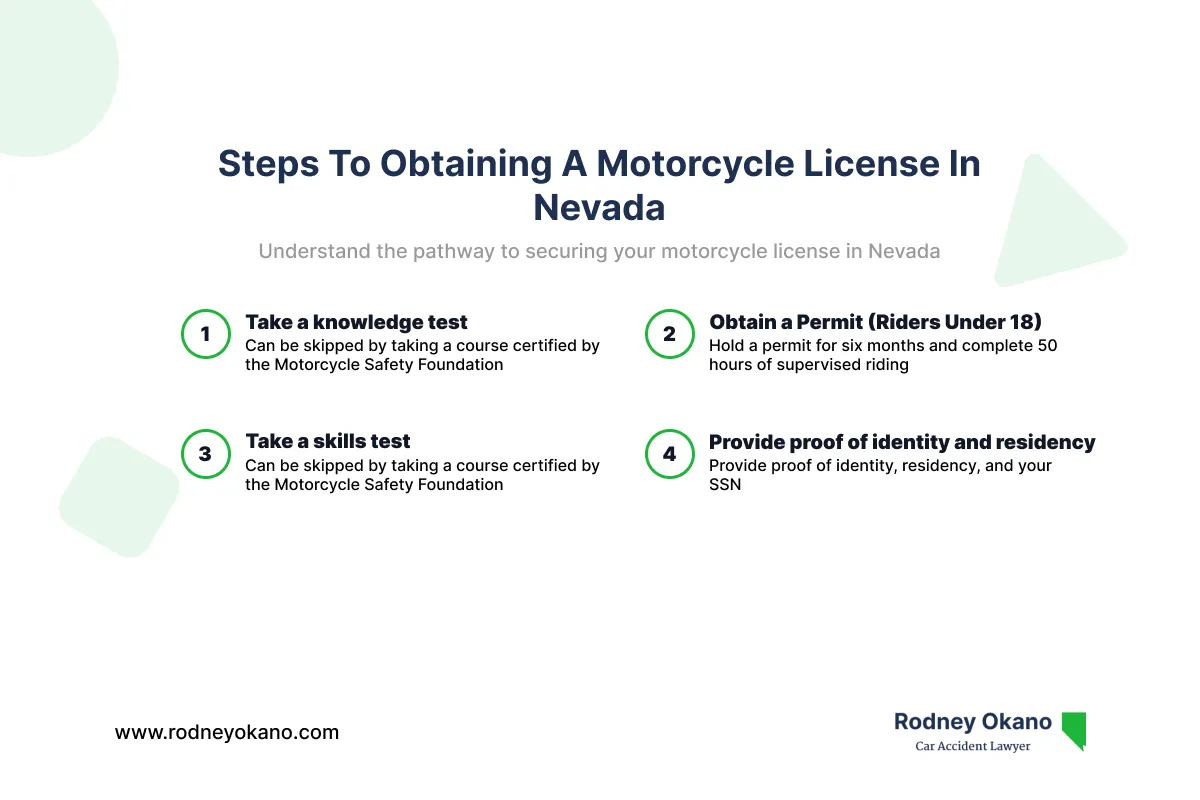
In Nevada, you must have a Class M license to legally operate a motorcycle on public roads and highways. Class M licenses differ from the typical Class C licenses required to drive automobiles.
To obtain a Class M license, riders who are under 18 but over 16 must first obtain a motorcycle instruction permit by passing a motorcycle safety test or completing a knowledge test, then complete 50 hours of supervised riding and hold the permit for 6 months before getting their license.
Those over 18 years or those who have completed the permit requirements can then get a Class M license by:
- Providing proof of identity and a Social Security number
- Providing proof of Nevada residency
- Taking a knowledge, skills, and vision test at the Nevada Department of Motor Vehicles or completing a Motorcycle Safety Foundation-approved motorcycle safety course
Nevada does not issue motorcycle endorsements; instead, it will issue you a Class M driver's license, which can be combined with Class A, B, or C licenses.
Drivers out of state who already hold a motorcycle endorsement or Class M license can transfer their license and skip the requirements by following the Nevada DMV's new resident guide.
How to Obtain a Class M License in Nevada
Obtaining a motorcycle license in Nevada requires passing both a written knowledge test and a skills test. Applicants can also complete a Motorcycle Safety Foundation-approved course to waive the skills test requirement when earning their Class M license.
Age Requirements for Motorcycle Operators
Under Nevada law, the minimum age to operate a motorcycle on public roads is 16 years old. Riders under 18 must hold a motorcycle instruction permit for at least six months before applying for a full motorcycle license. The permit requires:
- Passing a written knowledge test
- Completing a skills examination
- Supervised riding restrictions during the permit period
Nevada Motorcycle Permit Regulations
In Nevada, those under 18 but over 16 can obtain a motorcycle permit to start riding and put themselves on a path for a Class M license.
However, motorcycle permits come with strict regulations that focus on protecting young riders.
Restrictions for Permit Holders Under 18 Years Old
Under Nevada law, permit holders under 18 face strict riding limitations, including:
- No riding between 10 p.m. and 5 a.m.
- No carrying passengers
- No freeway riding until a full motorcycle license is obtained
- No riding without directed supervision from someone 21 or older
Nevada enforces these restrictions to reduce motorcycle accidents among younger, less experienced riders, who statistically face higher risks in traffic crashes.
Nevada Motorcycle Helmet Laws
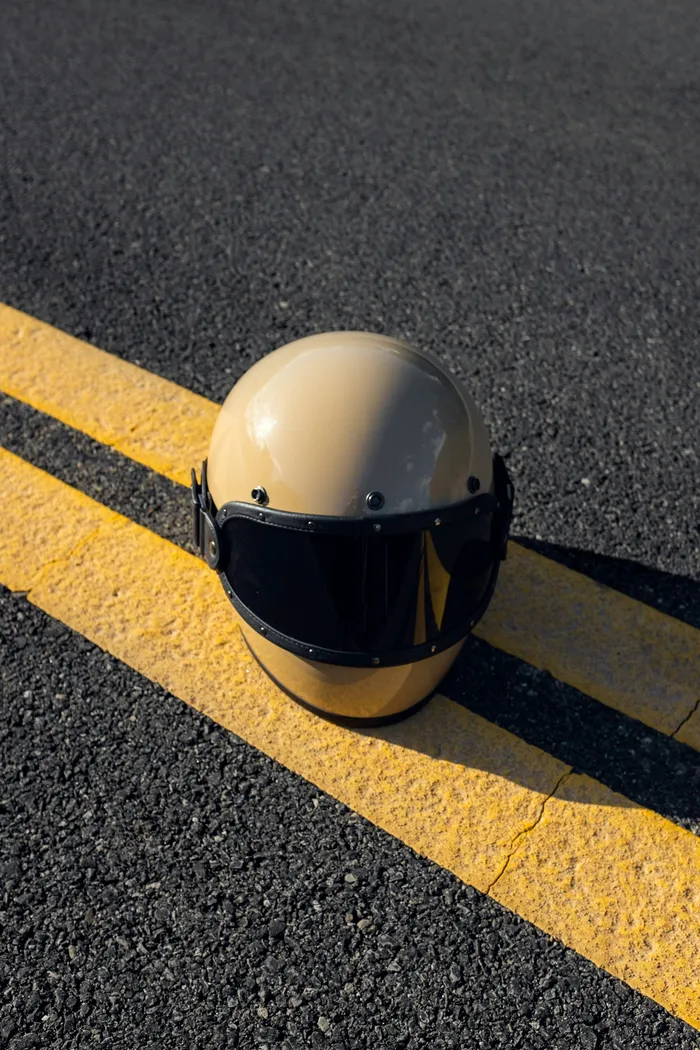
Nevada enforces a mandatory helmet law under NRS 486.231, meaning all motorcycle riders are required to wear helmets at all times while operating or riding on a motorcycle. Helmets must be:
- Approved by the Department of Public Safety
- Properly fitted to the rider's head
- Securely fastened under the chin while riding
Wearing helmets in Nevada isn't just the law, but it is also a way to protect yourself in a traffic accident, as according to the National Highway Traffic Safety Administration, helmets reduce the risk of fatal motorcycle crash injuries by 37%.
Who Is Required to Wear a Helmet on a Motorcycle
Under Nevada's universal helmet law, all motorcycle riders and passengers are required to wear an approved helmet, regardless of age or experience. This applies to:
- Operators
- Passengers in an attached sidecar
- Passengers on the pillion seat
Approved Helmet Specifications and Standards
Under Nevada motorcycle helmet law, helmets must meet standards set by the U.S. Department of Transportation and FMVSS No. 218, which require:
- Minimum 1-inch-thick inner liner
- Minimum weight of 3 lbs
- Chin straps.
Penalties for Riding Without a Helmet in Nevada
In Nevada, riding without a helmet carries fines and legal consequences, including:
- Up to a $250 fine
- Points added to your license
- Increased liability in accident claims
Riding without a helmet is a primary offense, meaning a police officer can cite you immediately upon observation.
Eye Protection and Face Shield Requirements
Under Nevada law, motorcycle riders must wear protective glasses, goggles, or a transparent face shield unless their bike has a windscreen. This requirement is outlined in NRS 486.231 and helps prevent serious injuries caused by debris, wind, and reduced visibility at highway speeds.
When Goggles or Face Shields Are Mandatory
Nevada law requires motorcycle riders to wear goggles or a face shield when operating a bike without a transparent windscreen. Specifically, acceptable options include:
- Goggles
- Face shields attached to helmets
- Windshields meeting approved safety standards
Exemptions to Eye Protection Rules
Nevada law sets out a specific exemption for eye protection: motorcycle riders operating motorcycles with an enclosed cab are not required to wear eye protection.
This applies because the cab itself acts as a physical barrier against wind, debris, and road hazards, making separate protective eyewear redundant.
Nevada Motorcycle Equipment Laws
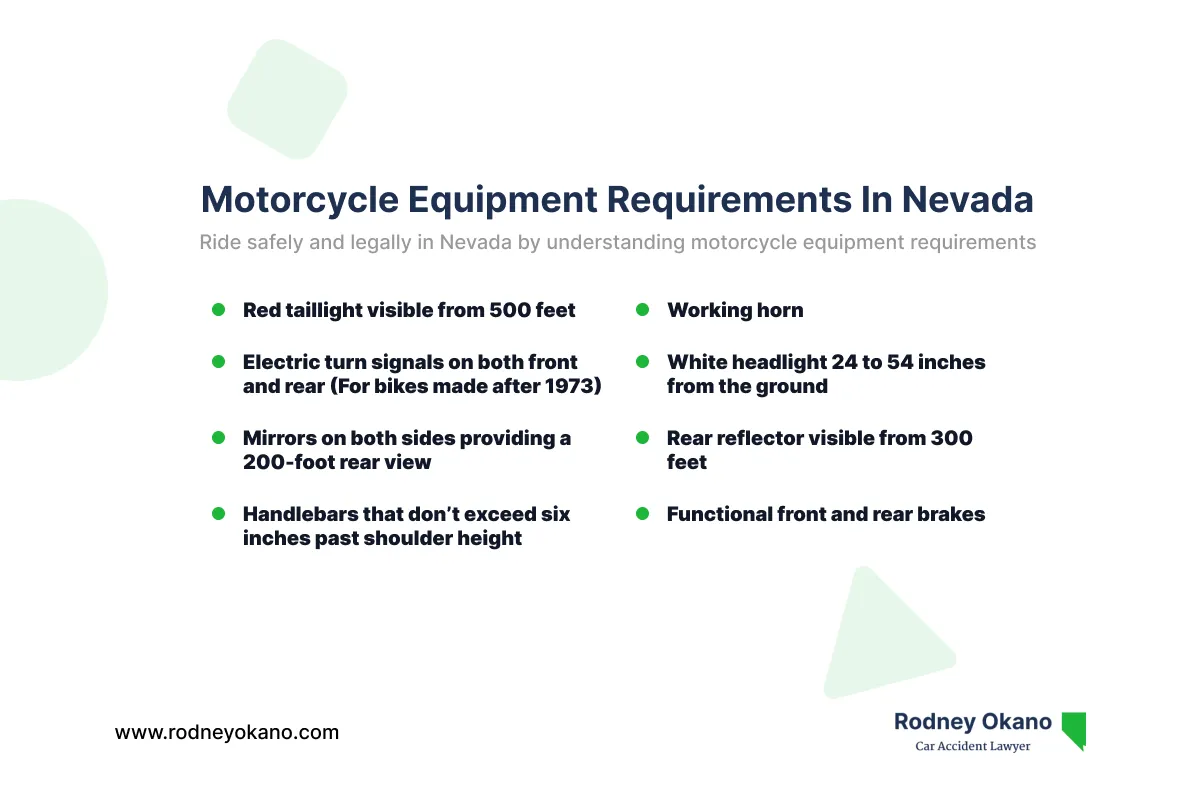
Nevada law mandates specific equipment standards that all motorcycle riders must meet before taking to Nevada roads. Under NRS Chapter 486, motorcycles manufactured must be equipped with:
- A red taillight visible from at least 500 feet
- A brake light activated by both hand and foot controls
- Electric turn signal lamps on both the front and rear
- Mirrors on both sides providing a 200-foot rear view
- Handlebars that do not exceed six inches above shoulder height
These requirements exist because improperly equipped motorcycles significantly increase the risk of traffic accidents. For example, a missing brake light could reduce reaction time for trailing drivers, resulting in a rear-end collision.
What Makes a Motorcycle Street Legal
Under Nevada law, a street-legal motorcycle must have:
- Functional headlights, taillights, and brake lights
- Mirrors on both sides
- A working horn
- Turn signals
- Tires meeting DOT standards
Motorcycles operating without these components can result in immediate citations and failed inspections.
Lighting, Mirror, and Brake Requirements
In Nevada, motorcycles must have at least two mirrors, functional front and rear brakes, and proper lighting. Other required equipment includes:
- A white headlight mounted no more than 54 inches nor less than 24 inches from the ground
- A rear reflector that is visible from 300 feet at night
- A red taillight visible from 500 feet
- Turn signals on models made after 1973
Lane Splitting and Lane Sharing Laws
Lane splitting in Nevada is illegal under NRS 486.351, meaning motorcycle riders cannot move between lanes of traffic. Lane sharing, however, permits two riders to occupy one complete traffic lane simultaneously.
- Lane splitting: Illegal
- Lane sharing: Legal (max 2 riders)
Is Lane Splitting Legal in Nevada
Lane splitting is not legal in Nevada. Under Nevada law, motorcycle riders are prohibited from passing between lanes of traffic or moving faster than the flow of vehicles around them.
This means riding between two rows of stopped or moving motor vehicles in adjacent lanes is a punishable traffic violation, carrying fines, demerit points, and potential liability in a motorcycle crash
Rules for Lane Sharing Between Two Motorcycles
In Nevada, two motorcycles may legally share a single lane, but no more than two may ride abreast simultaneously. Key rules for lane sharing in Nevada include:
- Maintaining safe lane positioning
- No weaving between traffic
- Keeping a controlled speed
Frequently Asked Questions About Nevada Motorcycle Laws
Can You Ride a Motorcycle With a Regular Driver's License in Nevada?
No, you cannot ride a motorcycle with a regular driver's license in Nevada. You must obtain a Class M license or a Class M endorsement added to your existing license. To qualify, you must pass a written knowledge test and a skills test, or complete an approved motorcycle safety course to waive the skills test requirement.
What Happens if You Are Pulled Over Without a Class M License?
Riding a motorcycle without a Class M license is illegal and can result in fines, vehicle impoundment, and potential arrest. Penalties vary, but fines can reach up to $1,000.
Additionally, riding without proper licensure may void your insurance coverage, leaving you personally liable for any damages resulting from a motorcycle crash.
Obtain the Compensation You're Entitled To
Contact Us Today
The Rodney Okano Car Accident Lawyer Law Firm is a Las Vegas personal injury law firm that specializes in representing those in car, truck, bus, and motorcycle accidents. Founded in 2001, our law firm has over 20 years of legal experience in Nevada and has remained dedicated to securing the maximum settlement for those injured in motor vehicle accidents. Our firm offers free consultations, which can be set up by calling or sending an email inquiry.