

7 min read time

Table of Contents

Are Self-Driving Cars Legal in Nevada?
Yes, Nevada allows self-driving cars. In fact, Nevada was the first state in the U.S. to legalize autonomous vehicles, with the Nevada Department of Motor Vehicles (DMV) issuing the first self-driving car license in March 2012.
What Is Considered a Self-Driving Car Under Nevada Law
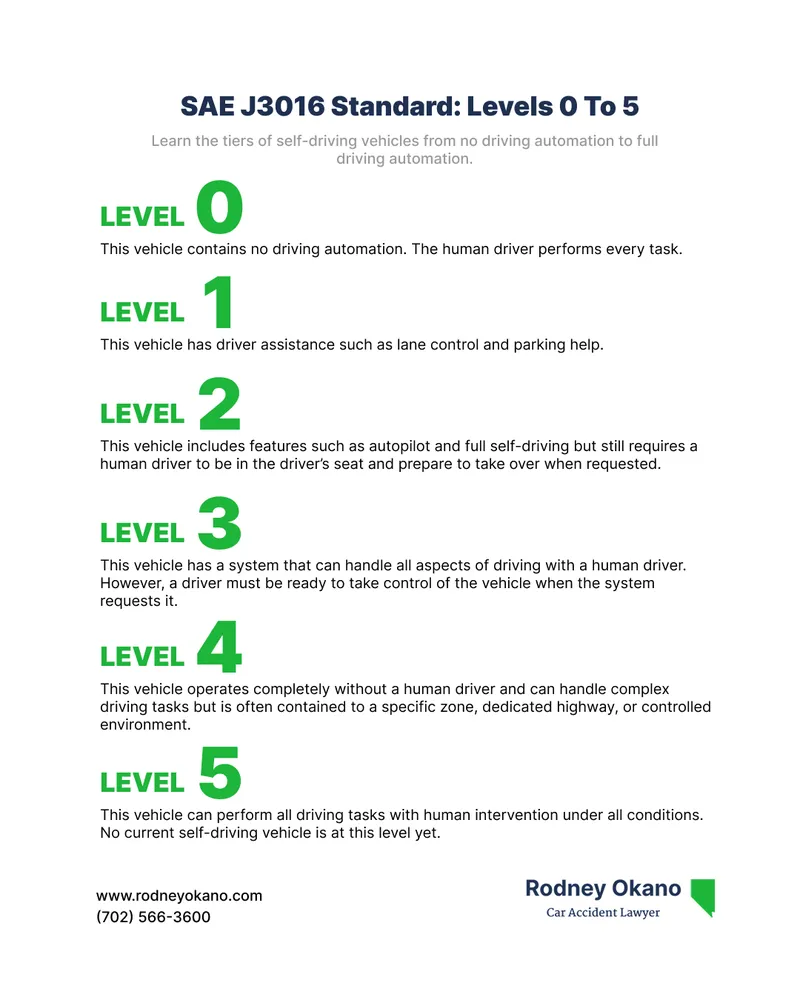
Under Nevada law, a self-driving car is defined as a motor vehicle equipped with an automated driving system designed to function at levels 3, 4, or 5 of driving automation, as defined by SAE J3016, without human intervention.
The SAE defines six levels of driving automation as follows:
- Level 0: No driving automation.
- Level 1: Driver assistance.
- Level 2: Partial driving automation.
- Level 3: Conditional driving automation. Under certain conditions, the vehicle can perform the driving task, but a human driver must be available to take over when requested.
- Level 4: High driving automation. The vehicle can operate without human intervention within its designated operating conditions.
- Level 5: Full driving automation. The vehicle can operate without a human driver under all driving conditions.
Nevada law does not tier licenses or permits based on the level of automation.
SAE Level 3 Autonomous Vehicles
In Level 3, the system handles all aspects of the driving task without a human operator. The driver does not need to take control of the vehicle when the system is engaged, as it is responsible for monitoring the driving environment and making driving decisions.
However, the driver must be ready to take over control when the system requests it or when the driving conditions are no longer suitable for the system to operate.
SAE Level 4 Autonomous Vehicles
Level 4 autonomous vehicles operate without a human driver in their designated operating areas, making them the best for testing in controlled environments like designated test zones or dedicated highways. These vehicles are designed to handle complex driving tasks autonomously, including navigating heavy traffic, unpredictable weather conditions, and emergency situations.
Level 4 autonomous vehicles are the highest level of automated vehicles we see on the roads today.
SAE Level 5 Autonomous Vehicles
SAE Level 5 refers to the highest possible level of driving automation. At this level, the vehicle is able to perform all driving tasks without human intervention under all conditions. This means the driver is not responsible for operating the vehicle. A Level 5 vehicle can handle any road type, weather, or traffic situation.
However, no vehicle currently operates at this level.
Nevada Law on Robotaxis: NRS Chapter 482A
Nevada's NRS Chapter 482A governs the development, testing, and deployment of autonomous vehicles on public roads.
Key statutes of NRS Chapter 482A that relate to robotaxis include:
NRS 482A.025: Automated Driving System Defined
NRS 482A.025 sets the definition of an "automated driving system," adopted from SAE J3016 standards, and provides the foundational definition for the level of automation. It defines autonomous vehicles as motor vehicles that can function at levels 3, 4, or 5, as per the SAE levels.
NRS 482A.080: Requirements For Testing Autonomous Vehicles
NRS 482A.080 outlines the requirements for testing or operating an autonomous vehicle on highways. These requirements include:
- An autonomous vehicle must be registered in Nevada, affixed with a label as per Federal regulations (49 C.F.R. § 567.4).
- For testing or operation without a human operator, the autonomous vehicle must be fully autonomous and capable of operating in compliance with state laws or achieving a minimal risk condition.
NRS 482A.090: Manufacturer Liability
NRS 482A.090 addresses liability for damages caused by defects in a motor vehicle or automated driving system. It states that the original manufacturer or developer of an autonomous vehicle is not liable for damages caused by defects after the conversion or modification of the vehicle by a third party unless the defect was present in the original vehicle or system.
NRS 482A.110: Only the DMV Can Adopt Regulations and Impose Requirements on Autonomous Vehicle Technology
NRS 482A.110 specifies that only the DMV has the authority to adopt regulations or impose requirements related to autonomous vehicles. It prohibits local governments from imposing taxes, fees, or other requirements on autonomous vehicles or their operators.
NRS 482A.200: No Requirement of a Human Driver
NRS 482A.200 states that no motor vehicle or traffic laws require a human driver to operate a fully autonomous vehicle. But the autonomous car must be capable of performing any physical acts that would be required of a human driver, except if those actions have no application to the self-driving system.
What Robotaxi Companies Are Operating in Nevada
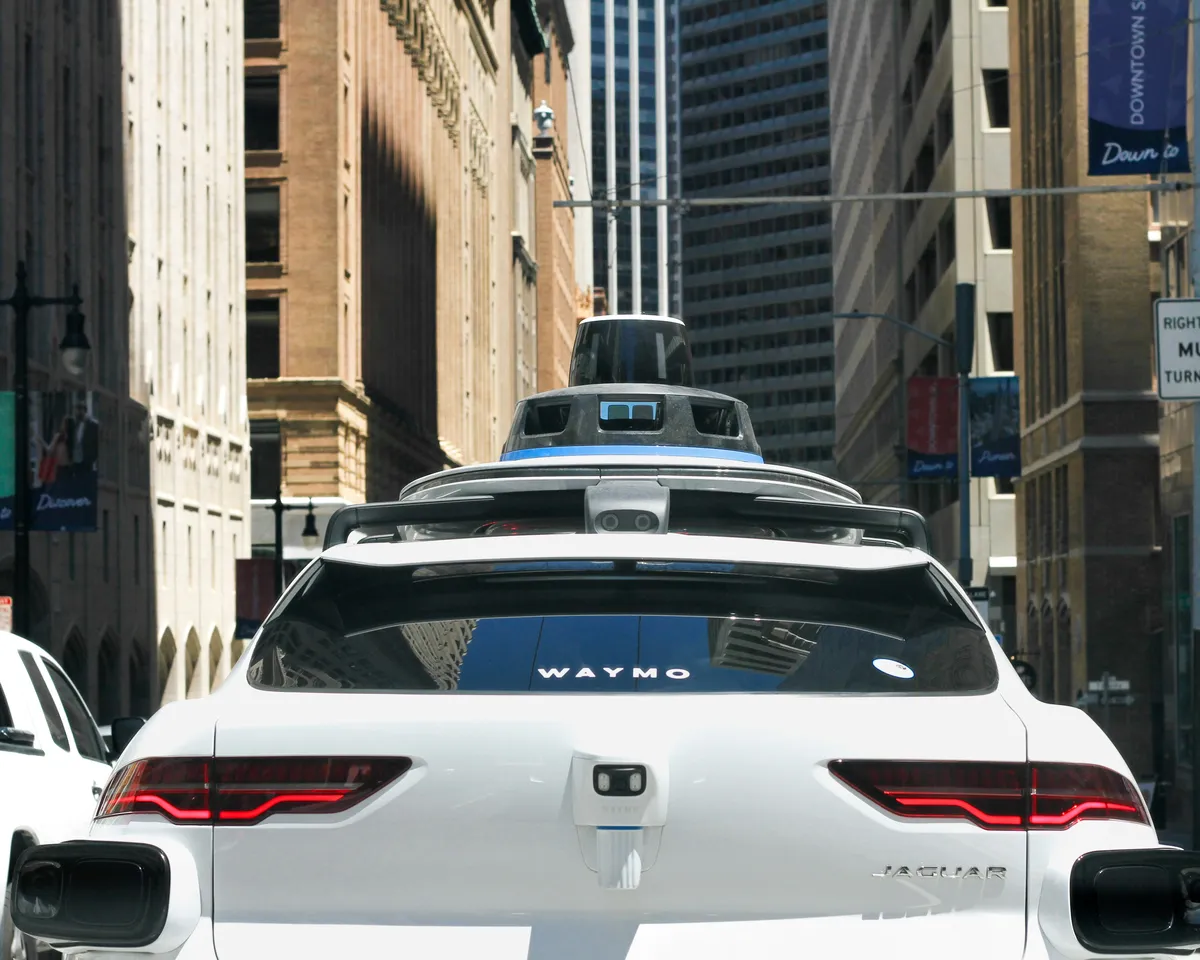
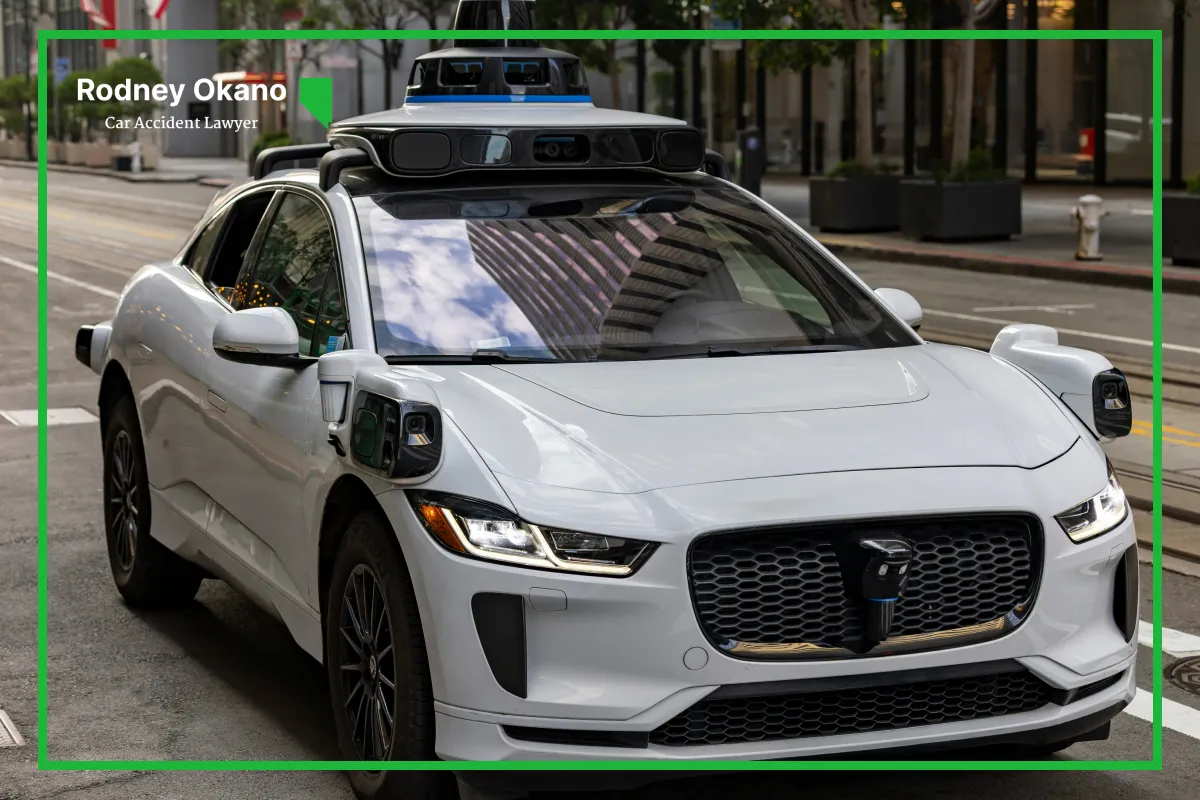
Tesla, Uber, and Waymo have all received regulatory approval to operate thousands of robotaxis in Clark County, including Las Vegas.
Tesla's permit allows it to deploy up to 5,000 robotaxis, while Waymo is allowed to operate up to 1,000 autonomous vehicles. Uber was also approved for 1,000 robotaxis, which it will operate through its subsidiary, Aviari.
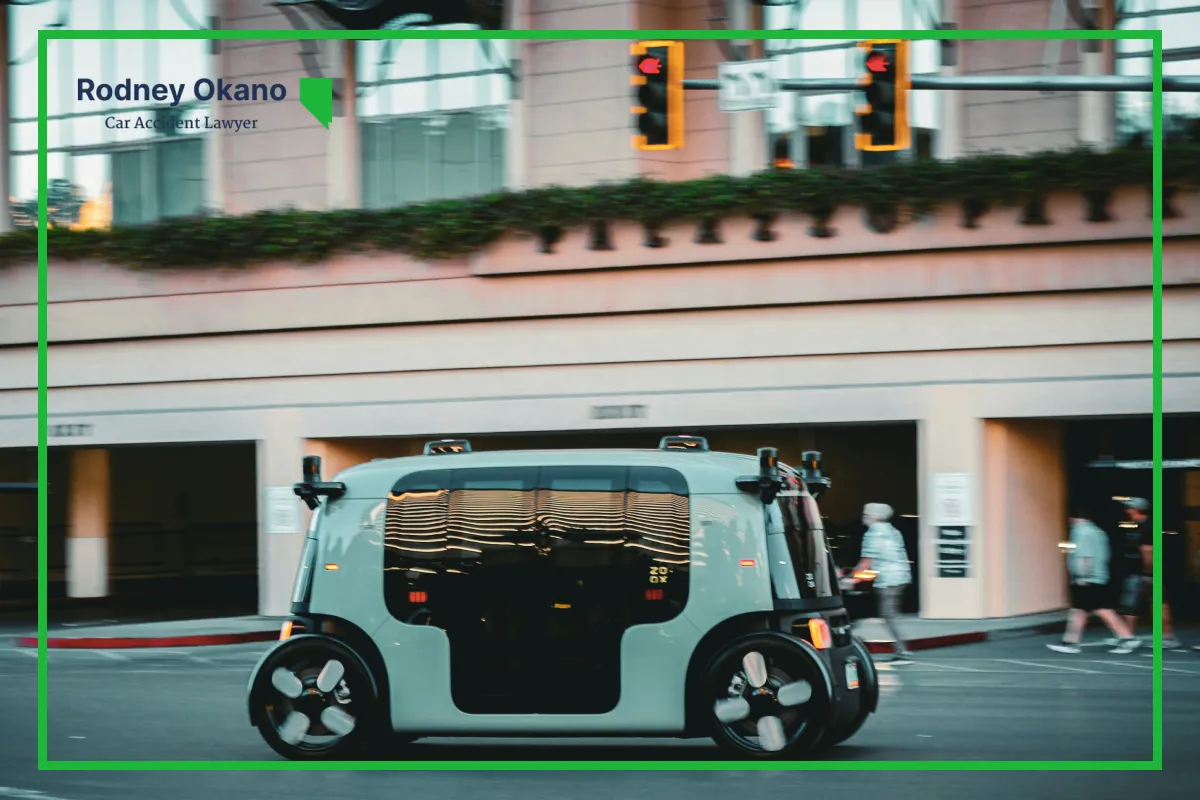
Zoox already holds an autonomous vehicle network company permit that allows it to operate 100 robotaxis.
These self-driving cars are most commonly seen around the Las Vegas Strip but can sometimes slip into other parts of Clark County.
Who Is Liable in a Self-Driving Car Accident Under Nevada Law
In a Nevada autonomous car accident, multiple parties may be responsible. In addition to the human operator or overseer, the vehicle manufacturer may be liable under product liability law if the vehicle's design, parts, or software had a defect. The software developer may also face liability if a system malfunction, coding error, or AI decision caused the crash.
Other parties, such as the vehicle owner, the fleet operator, or other drivers involved in the accident, may also share responsibility.
Establishing which party caused the crash requires evidence, crash data, and often expert analysis. A self-driving vehicle accident attorney from our law firm can help identify liable parties and build you a claim based on the facts.
Steps to Take If You Hit a Self-Driving Car
The steps you should take if you are hit by a self-driving car are similar to what you would do if you were in a car accident with another human-driven vehicle. Here are the steps that you should take:
- Make Sure You Are Safe: If possible, move to a safe location and stay out of harm's way.
- Call Emergency Services: Dial 911 to report the accident and get medical assistance for any injuries.
- Document the Scene: Take photos and videos of the accident scene, vehicle, and any injuries. Note the make, model, and license plate of the self-driving car. Take down witness accounts and gather their contact information.
- Get Vehicle Information: Identify the company responsible for the self-driving vehicle. This may include an operator or the technology company running the self-driving program. Typically, the company name will be all over the vehicle, making it pretty obvious.
- Seek Medical Attention: Even if injuries appear minor, getting checked out is important, as some issues may surface later.
- Notify Your Insurance: Inform your insurance company about the accident as soon as possible, but avoid giving recorded statements.
- Contact an Attorney: Protect your rights and potential settlement by scheduling a free consultation with a Las Vegas car accident attorney at the Rodney Okano Car Accident Lawyer Law Firm.
Driver's License and Insurance Requirements for Self-Driving Vehicles in Nevada
Nevada law allows all levels of automation to operate on public roads, but requires a permit from the DMV for fully autonomous vehicles. Unlike other states with tiered licensing, Nevada does not issue different licenses based on automation level.
However, drivers must still meet standard requirements for a Nevada driver's license.
Insurance Requirements for Personal Vehicles with Assisted Driving
For personal vehicles with autonomous vehicle technology, insurance requirements are the same as for regular vehicles. Even though these vehicles can drive on their own in certain conditions, the human driver is still responsible for supervision and must be able to take control at a moment's notice.
These liability insurance requirements are:
- $25,000 for bodily injury or death of one person in an accident
- $50,000 for total bodily injury or death per accident
- $20,000 for property damage per accident
Insurance Requirements for Commercial Self-Driving Vehicles
For fully autonomous cars, such as a fully driverless robotaxi, Nevada law requires liability coverage, a surety bond, or a cash deposit of at least $5 million in addition to the minimum liability coverage.
This high insurance requirement is intended to ensure that companies operating self-driving cars in Nevada can cover significant potential damages resulting from accidents.
Can You Get a DUI in a Self-Driving Car in Nevada?
Yes. Even though modern cars like Tesla's Autopilot offer hands-off driving, they still need a human driver. Nevada law says that if you're under the influence while in control of a vehicle, meaning in the driver's seat, you can be charged with a DUI.
Who Counts as the Driver
In Nevada, a driver is any person who is in actual physical control of the vehicle. Even if the vehicle offers fully driverless capabilities, like a Tesla, the person who activates the fully driverless system is still considered to be in actual physical control of the vehicle, as it still requires active supervision.
Can I Personally Purchase a Fully Self-Driving Vehicle in Nevada?
While Nevada is a pioneer in allowing autonomous vehicles to operate on public roads, there are currently no driverless vehicles available for personal purchase or rental that meet SAE Level 4 or 5 autonomy.
The highest level of vehicle autonomy you can currently get is SAE Level 3, which provides autopilot and full self-driving but still legally requires a human driver in the driver's seat ready to take control, which is enforced by the in-car tech.
Obtain the Compensation You're Entitled To
Contact Us Today
The Rodney Okano Car Accident Lawyer Law Firm is a Las Vegas personal injury law firm that specializes in representing those in car, truck, bus, and motorcycle accidents. Founded in 2001, our law firm has over 20 years of legal experience in Nevada and has remained dedicated to securing the maximum settlement for those injured in motor vehicle accidents. Our firm offers free consultations, which can be set up by calling or sending an email inquiry.