

6 min read time

Table of Contents

What Is Jaywalking Under Nevada Law?
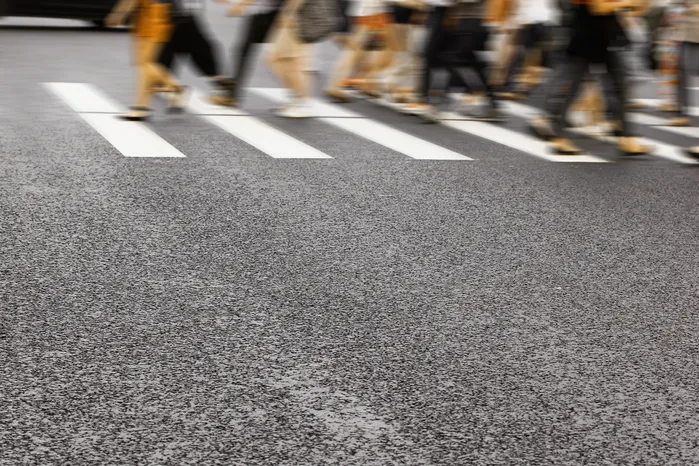
Under Nevada law, NRS 484B.287, jaywalking is defined as crossing the street illegally outside a designated crosswalk or an unmarked crosswalk at an intersection. This behavior is considered a civil infraction and can result in fines of $160 in Las Vegas and $115 in Reno.
Crossing mid-block or against a "Do Not Walk" pedestrian signal also counts as jaywalking, but there could be legal defenses if it's due to an emergency situation.
How Nevada Defines Illegal Pedestrian Behavior
Under NRS 484B.287, pedestrians must use marked crosswalks and follow pedestrian signals when they are present. Crossing at locations other than designated crossing points is considered jaywalking and is illegal under Nevada's traffic laws.
Common Situations That Qualify as Jaywalking
In the Las Vegas Valley, these pedestrian actions could be considered jaywalking:
- Crossing mid-block outside of a crosswalk
- Crossing an intersection against a pedestrian signal
- Crossing diagonally in an intersection
Who Is at Fault When You Hit a Jaywalking Pedestrian in Nevada?
Under Nevada's modified comparative negligence law and the Nevada Supreme Court Case Anderson v. Baltrusaitis, both drivers and pedestrians can share responsibility in accidents. A driver can be considered at fault for speeding, running a red light, or driving while distracted, while a pedestrian could be found liable for breaking traffic rules by jaywalking.
Key things that a Nevada court considers when analyzing fault in a jaywalking accident include:
- Whether the driver was speeding or operating the vehicle while distracted
- The current traffic conditions at the time of the accident
- How visible the pedestrian was to the driver
- If the driver had enough time to react safely
If it is determined that the pedestrian jaywalking contributed 50% or more to the accident, they are not allowed to recover compensation under Nevada law, and the driver will be free from paying damages.
Nevada's Comparative Negligence Law and Pedestrian Accidents
Under NRS 41.141, fault in pedestrian accidents is divided based on each party's contribution to the accident. This means compensation for damages is reduced proportionally based on the degree of fault attributed to the pedestrian. For instance, if a pedestrian is found to be 30% at fault and the total award is $100,000, they would receive only $70,000.
However, if the pedestrian's share of fault exceeds 50%, recovery of damages is completely barred under the doctrine of shared fault.
How Fault Percentages Are Assigned Between Drivers and Pedestrians
Fault percentages in pedestrian accidents are determined based on specific factors like driver speed, distraction, visibility, right-of-way, and pedestrian behavior.
These factors create non-linear outcomes in pedestrian accidents; for example, if a driver speeds through an area with heavy foot traffic, such as downtown Las Vegas, they might be held more responsible, even if the pedestrian crossed illegally.
How Shared Fault Affects Your Compensation
Under Nevada's 51% bar rule, the amount you can receive in a personal injury claim depends on your share of fault.
For example, if you are found 25% at fault and awarded a $150,000 settlement, it would become $112,500, and if your fault is 50%, your recovery would drop to $75,000.
Evidence used to determine these percentages includes police reports, witness statements, video footage, and accident reconstruction methods.
Driver Duty of Care Toward Pedestrians in Nevada
Under NRS 484B.280, drivers must take extra care to avoid hitting pedestrians while driving. Drivers are required to:
- Slow down and yield to pedestrians when the "walk" signal is active at crosswalks
- Stop for pedestrians using unmarked crosswalk areas
- Attempt to stop or slow down for jaywalking pedestrians
- Stop before crosswalks and not in them or after them
Given that Nevada has a high rate of pedestrian deaths, coming in fourth for the highest pedestrian fatality rate, this duty of care is scrutinized in any personal injury lawsuit.
What Reasonable Care Looks Like
Reasonable care under Nevada law involves actively watching intersections, giving the right of way at crosswalks, and honking to alert pedestrians in dangerous situations. Not following these rules can result in:
- Fines ranging from $250 to $1,000
- 50 to 99 hours of community service
- Being charged with a Category B felony if serious injuries happen
When the Pedestrian Is Primarily at Fault for the Accident
In Nevada, a pedestrian can be found mainly at fault, 51% or more, for an accident if they do things such as:
- Darting into traffic
- Crossing against signals
- Lying in the road
- Jaywalking at night, where drivers may argue they didn't see the pedestrian until the last second
However, committing any of the above-mentioned actions doesn't automatically make a pedestrian primarily at fault, so it's important that if your situation relates to that, you contact a Las Vegas pedestrian accident attorney from the Rodney Okano Car Accident Lawyer Law Firm.
When the Driver Is Primarily at Fault Despite the Pedestrian Jaywalking
Even when a pedestrian is jaywalking, drivers can still be held primarily responsible if their actions were more significant in causing an accident. Nevada law includes the "last clear chance" doctrine, which states that if a driver had enough time and space to avoid hitting a pedestrian but failed to do so, they may bear greater responsibility.
Specific behaviors that could shift fault toward the driver include:
- Speeding beyond the posted speed limit
- Driving while distracted by a phone or other device
- Failing to exercise reasonable care near intersections
- Ignoring poor visibility conditions
Under comparative negligence rules, a driver who was speeding at the time of an accident could still be assigned 80% fault, even if the pedestrian was illegally crossing. This can significantly impact the final compensation amount in such cases.
The Last Clear Chance Doctrine in Nevada Pedestrian Accidents
Nevada's last clear chance doctrine is significant in pedestrian accident cases, especially when jaywalking is involved. This doctrine states that even if a pedestrian was illegally crossing the road, a driver who hits the pedestrian despite having enough time and space to avoid hitting them might be held responsible.
For example, if on a sunny day a driver is going down a straight road and, about 500 feet up, a pedestrian is jaywalking, and the driver hits the pedestrian, they would be held liable for not taking the opportunity to avoid the accident by stopping, slowing down, or switching lanes.
How Insurance Companies Evaluate Jaywalking Accident Claims
Insurance companies often try to reduce claim payouts by blaming pedestrians for jaywalking, arguing that the walkers were distracted or suddenly entered the road. You can challenge these claims with evidence such as traffic camera footage and records from your phone showing when you were in an area.
Why Insurers Focus on the Pedestrian's Illegal Crossing
Insurers focus on illegal crossings because it affects how much blame is placed on each party. By claiming the pedestrian's unexpected action reduced the driver's responsibility, insurers can lower the amount they pay out in claims under Nevada's comparative negligence laws.
How to Counter an Insurance Company's Fault Argument
Key evidence that can help counter an insurance company's blame includes:
- Traffic or surveillance camera footage
- Photos of the accident scene
- Witness statements and police reports
Working with a Las Vegas pedestrian accident lawyer can also greatly help in countering insurance company arguments as they compile evidence and negotiate on your behalf.
What Evidence Determines Fault in a Jaywalking Accident
Fault in a jaywalking accident depends on specific evidence that insurers and courts use to divide responsibility among those involved. Traffic camera footage can show if a driver was speeding or ran a red light, and skid marks can indicate how quickly they reacted. Other key types of evidence include:
- Vehicle data
- Eyewitness statements and police reports
- Driver phone records
Road design and visibility conditions also play a role in fault determinations. Poor lighting may hurt a pedestrian's case, as the driver could argue that they didn't see them.
Surveillance and Dashcam Footage
Surveillance footage from traffic cameras, business cameras, and Ring doorbells provides clear views of the accident. This can show if a driver was speeding or ignoring traffic signals.
Police Reports
Police reports include what officers saw, what witnesses said, and any tickets given at the accident site. These documents are key to figuring out who was at fault and are used by insurers, courts, and attorneys alike.
Traffic and Road Condition Analysis
Road conditions and visibility play a crucial role in determining fault during an accident. Evidence such as skid marks, debris placement, and road design is analyzed to understand the actions of all parties involved. Key factors include:
- The speed at which the driver was traveling
- The lighting conditions at the time of the incident
- The width of the road
Obtain the Compensation You're Entitled To
Contact Us Today
The Rodney Okano Car Accident Lawyer Law Firm is a Las Vegas personal injury law firm that specializes in representing those in car, truck, bus, and motorcycle accidents. Founded in 2001, our law firm has over 20 years of legal experience in Nevada and has remained dedicated to securing the maximum settlement for those injured in motor vehicle accidents. Our firm offers free consultations, which can be set up by calling or sending an email inquiry.