

7 min read time

Table of Contents

What Are Secondary Car Accidents?
A secondary car accident is any crash that happens as a result of a "primary" car accident. Secondary car accidents are usually caused by traffic conditions such as drivers failing to slow down, poor visibility, or other drivers reacting too late to the first crash.
A secondary car crash can cause serious injuries and property damage, compounding the trauma of the original incident. An advanced legal strategy is often needed to address both the initial crash and any subsequent accidents, so working with an experienced car crash attorney is highly recommended.
Secondary Accidents vs. Primary Collisions
The main difference between the two lies in timing and causation. A primary collision is the initial crash, while a secondary one happens as a result of a delayed or inappropriate response from surrounding drivers.
For example, if a driver swerves too late to avoid an initial crash and hits a vehicle involved in the initial crash, that is a secondary car accident.
Secondary crashes also differ from primary collisions in that they often involve more drivers and can create more complex liability issues. These accidents can also result in more severe injuries, as multiple impacts may occur in quick succession. Because secondary accidents occur in the aftermath of a primary crash, they may be harder to prevent.
An experienced personal injury attorney at our firm can help you understand how to establish liability and pursue compensation for your injuries, even if your accident is secondary.
Common Examples of Secondary Crashes
Common examples where secondary car accidents happen include:
- Rear-End Collisions: A leading driver suddenly stops due to an accident or traffic signal, and a following vehicle hits them.
- T-bone Collisions: A driver fails to yield to a vehicle that is stopped or moving slowly due to the primary accident.
- Sideswipe Collisions: A vehicle changes lanes too quickly or improperly, due to the initial crash causing a collision with another vehicle.
- Multi-Vehicle Pile-ups: A chain-reaction crash where multiple vehicles are involved due to the primary accident.
- Pedestrian Strikes: A vehicle strikes a pedestrian who is injured or standing near the crash scene.
- Vehicle Debris: The primary crash damages a vehicle, which then impacts nearby vehicles or objects.
These secondary crashes complicate the legal process and make evidence gathering more challenging, but they often result in higher compensation due to the additional injuries, damages, and insurance companies involved.
Why Secondary Car Accidents Happen
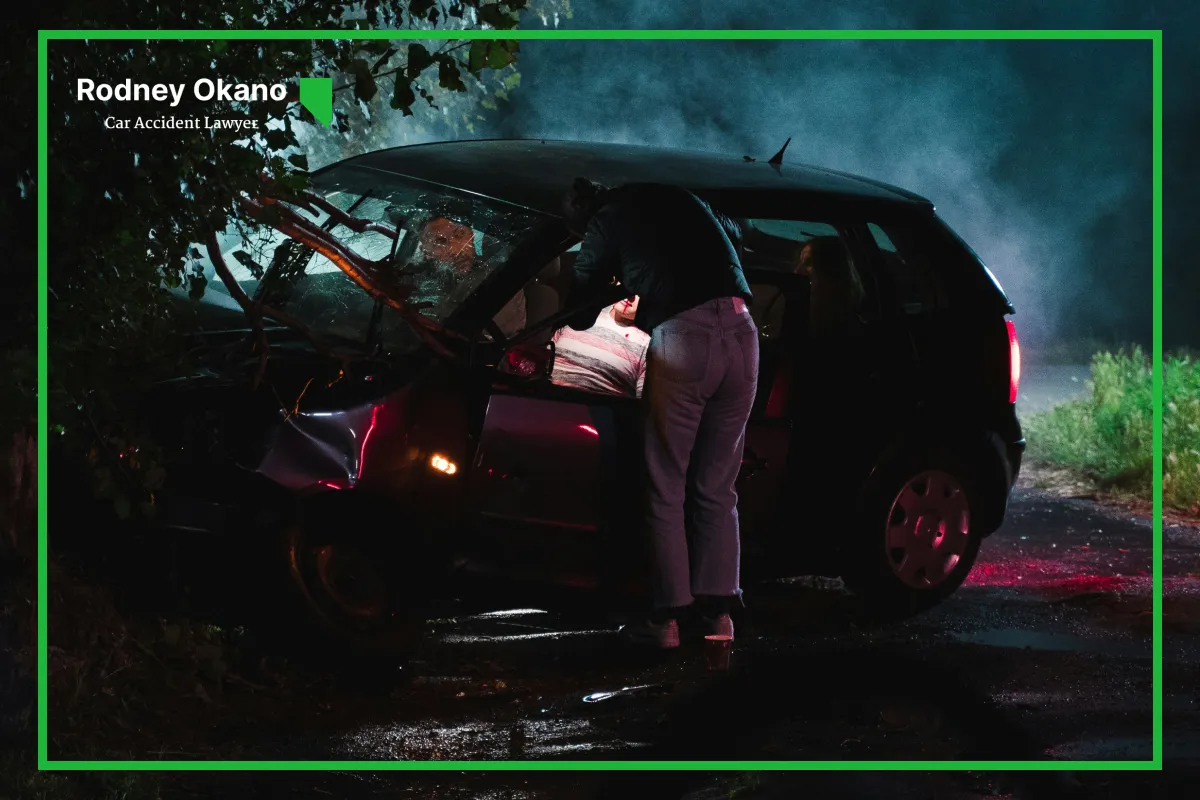
Secondary accidents occur after primary accidents and most commonly on highways due to high speeds and the proximity of vehicles. Countless factors contribute to secondary accidents, with the most common being:
- Distracted Driving and Rubbernecking: Many drivers become fixated on the accident scene, leading to poor judgment and reduced reaction times. This loss of focus and cognitive distractions can lead to chain-reaction crashes.
- Sudden Braking and Reduced Visibility: Primary accidents can cause sudden stops, leaving other drivers with not enough time to react. Smoke, dust, or debris from the initial crash can also impair visibility, increasing the risk of additional collisions.
- Stopped Vehicles in Travel Lanes: A vehicle stopped due to the primary accident can block lanes, forcing other drivers to swerve, change lanes, or brake abruptly and potentially causing secondary accidents.
- Poor Weather and Road Conditions: Weather conditions such as rain, snow, or ice can make driving conditions dangerous, making it harder for drivers to react to the primary accident.
Distracted Driving and Rubbernecking
The traffic line is moving along, but you slow down to watch the flashing emergency lights and bent vehicles. Unfortunately, the car behind you didn't anticipate that you would slow down, and they run into you. Now you're the one being "Rubbernecked".
As demonstrated in the example above, rubbernecking can involve a driver slowing down excessively or tailgating the car in front of them to get a better view. Both behaviors can open up the possibility of a secondary car accident.
Sudden Braking and Reduced Visibility
When an accident occurs, vehicles may suddenly come to a stop, which can trigger a chain reaction of abrupt stops and skyrocket the chance of a rear-end crash.
Also, any dust, debris, or smoke from the initial accident can reduce other drivers' visibility, preventing them from seeing ahead.
Stopped Vehicles in Travel Lanes
One of the most common causes of secondary car accidents in Nevada is stopped vehicles in travel lanes. When a car stops suddenly due to mechanical failure, an accident, or other reasons, drivers behind it are often not prepared to stop in time, especially at highway speeds.
This can lead to a chain reaction of collisions, where each driver becomes a victim of the driver in front of them.
Poor Weather and Road Conditions
It's not uncommon for weather-related secondary accidents to occur, especially in Nevada, where the weather can change quickly. Poor weather conditions like heavy rain, snow, fog, or strong winds can make driving more difficult and increase the risk of avoiding initial accidents.
How to Avoid a Secondary Car Accident
To avoid secondary car accidents as an uninvolved driver, you should stay alert, avoid excessive speeding, and proceed cautiously. When approaching an accident scene, perform these three actions:
- Stay Alert: Constantly monitor the road and surroundings for hazards.
- Avoid Excessive Speeding: Maintain the appropriate speed for road conditions and traffic.
- Proceed Cautiously: Be careful when approaching accident scenes.
The most important of those three is staying alert, as most secondary vehicle accidents occur due to distracted driving, whether it be drivers looking at the accident scene or looking at the flashing emergency lights.
Can I Still Claim Damages If I Was in a Secondary Accident
The short answer is yes. Victims who are injured in a secondary car accident can still pursue compensation from the party or parties responsible for the original accident.
Secondary car accidents don't automatically end your claim, especially when the first party's actions created unsafe conditions that led to a chain-reaction crash. A car accident lawyer from The Rodney Okano Car Accident Lawyer Law Firm can help you establish liability, document your injuries, and ensure you get the compensation you deserve from the correct party.
Who Can I Sue in a Secondary Accident
If you were hit while trying to avoid the primary accident, you may be able to seek compensation from both the original at-fault party and any other driver who contributed to the secondary collision.
While rarer, other potential parties include vehicle owners, employers, and vehicle manufacturers.
Where Secondary Accidents Commonly Occur in Nevada
Secondary accidents can occur anywhere in Nevada, but are most commonly seen in:
- In the Las Vegas Valley, secondary accidents are common in high-traffic zones such as I-15 (the "Interstate of Death"), I-215, and the Las Vegas Motor Speedway area.
- Desert highways like US-95 are notorious for multi-car pile-ups, especially near Pahrump and the Nevada/Arizona border, where drivers often travel at high speeds and face long stretches of straight roads.
- In Reno, secondary accidents are seen in downtown areas
Other hotspots for secondary car accidents include intersections, construction zones, and highways where emergency vehicles are responding to a primary accident. This is most common in high-traffic areas with low visibility and limited access, which forces emergency vehicles to stop in traffic lanes.
Secondary Crash Statistics in Nevada
According to secondary car accident data from the Federal Highway Administration, Nevada secondary crash statistics from September 2018 to December 2020 show:
- Nevada had a total of 162,688 crashes during this period
- Of those 162,688 crashes, 3,030 were classified as secondary crashes
- This means that around 1.86% of the crashes in Nevada between September 2018 and December 2020 were secondary accidents
While secondary vehicle crashes were relatively low compared to the total number of crashes, they still occur and remain a threat, making it important for drivers to prioritize safe driving around accident scenes to avoid secondary accidents.
How Dangerous Are Secondary Collisions?
Secondary collisions are arguably more dangerous than the initial collision for several reasons. These accidents can cause more injuries to the occupants of the vehicle involved in the initial accident. Often, the occupants of the vehicle involved in the primary accident are already restrained by seatbelts, and airbags are deployed, making it difficult for them to protect themselves from further injury.
Secondary collisions can also cause additional damage to the vehicle, making it difficult for emergency responders to access the occupants. In some cases, the secondary collision can also cause the vehicle to come to rest in a location that is difficult to access, such as in the middle of the road.
A secondary collision can also injure people not involved in the initial accident. For example, a secondary collision can cause the vehicle to strike a parked car, injuring the occupants. A secondary collision can also cause the vehicle to strike a pedestrian, injuring the pedestrian.
Common Injuries in Secondary Crashes
Secondary car accidents can result in significant injuries and even death. Since secondary collisions occur after an initial crash, victims of the initial crash often sustain new injuries or have the ones they suffered in the initial crash worsened.
Some of the most common injuries from secondary car crashes include the following:
- Head injuries
- Neck and back injuries
- Soft tissue injuries
- Broken bones
- Internal injuries
- Paralysis
- Fatality
Risks to First Responders and Stranded Motorists
Secondary crashes bring significant risks to both first responders and stranded motorists. Emergency personnel must navigate hazardous scenes while managing the unpredictable behavior of other drivers. Stranded motorists may also face dangerous situations if they become trapped in the middle of traffic lanes after a collision.
These additional dangers are often overlooked, as drivers may focus their attention on the original incident rather than the road ahead.
Obtain the Compensation You're Entitled To
Contact Us Today
The Rodney Okano Car Accident Lawyer Law Firm is a Las Vegas personal injury law firm that specializes in representing those in car, truck, bus, and motorcycle accidents. Founded in 2001, our law firm has over 20 years of legal experience in Nevada and has remained dedicated to securing the maximum settlement for those injured in motor vehicle accidents. Our firm offers free consultations, which can be set up by calling or sending an email inquiry.